
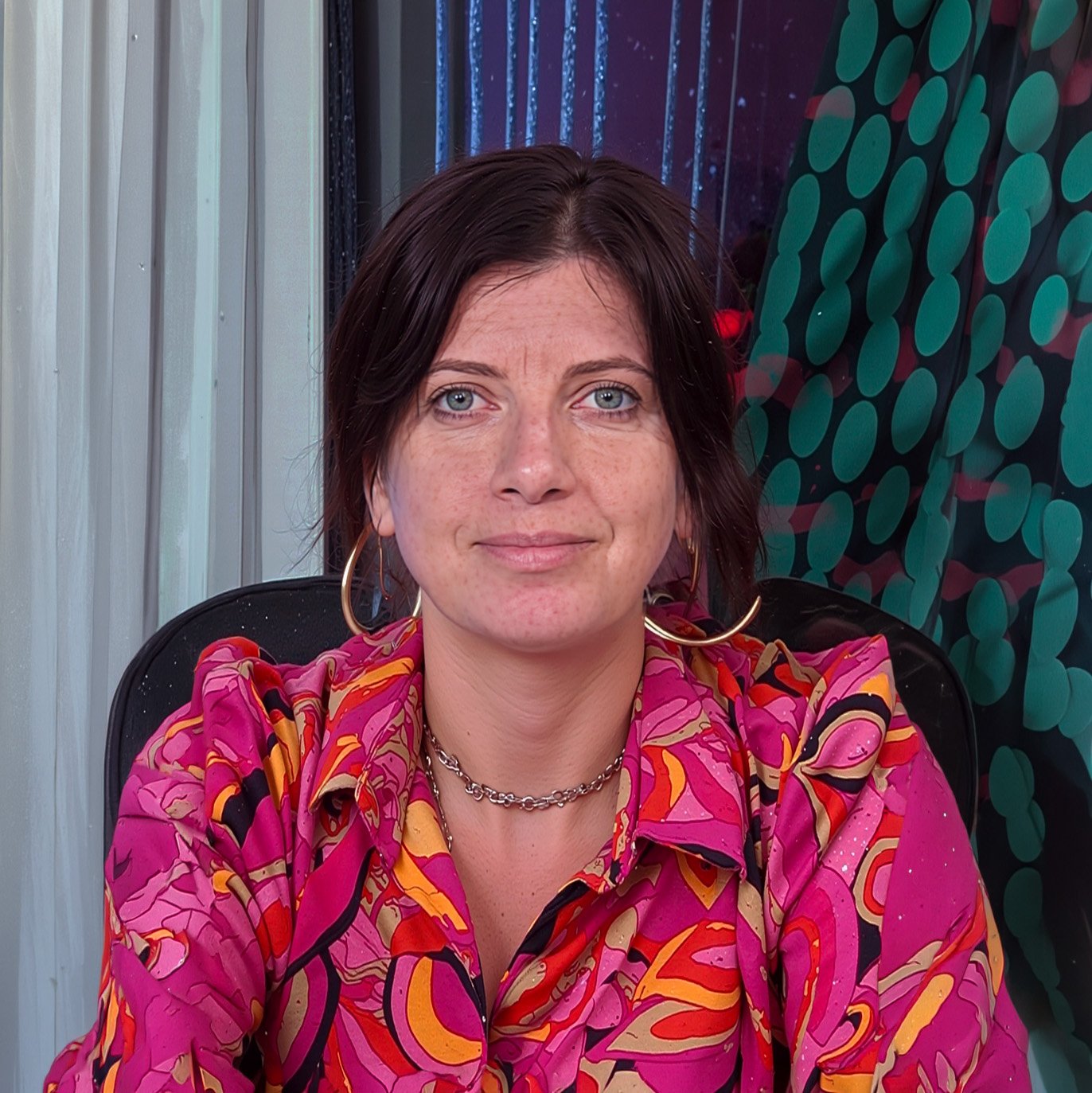
Season 04 – Episode 113: Toxic Shame, Addiction & the Long Way Home to Self, with Dagmara Ziniewicz
By The Gifts of Trauma /
Listen this episode here:
or here
Dagmara grew up in communist Poland, where feelings weren’t discussed, and disappointment was carried quietly. She moved to the US at twenty, where she worked at odd jobs, drank, partied hard and led a very colourful life. She continued moving from country to country, searching for the one place where her life would start working. It took her mother’s illness, and a conversation at a spiritual retreat, to uncover that she’d actually been running from what she’d been searching for.
In this conversation Dagmara shares her transformational journey and explains:
- What toxic shame can actually feel like, in the body
- How a single conversation at a spiritual retreat became the doorway into her own childhood
- Why when the phrase, “my life doesn’t work” comes up, it is worth taking seriously
- What happens when someone starts questioning whether they were ever the problem
This episode ends with Dagmara passing on something beautiful and brilliant that she wished someone had told her when she was travelling the world, looking for answers. “if you feel lost, or have problems with yourself, or in relationships, with dissatisfaction, or perfectionism, or workaholism or addictions, you may need some healing.”
Episode transcript
00:00:01 Rosemary
If you’ve completed or are currently enrolled in Compassionate Inquiry training, you’re invited to attend the third International CI Conference in Vancouver, Canada, from October 30 to November 1. Dr. Gabor Maté is returning as our keynote speaker and masterclass presenter. Enjoy engaging workshops and inspiring demonstrations with Sat Dharam Kaur, CI facilitators and practitioners. Whether you join us in person for three days of shared inquiry with CI coworkers, partners and colleagues from around the world, or attend virtually to focus on the teachings, tap the link in the show notes to learn more and secure your place. And yes, there will be dancing.
00:00:50 Dagmara
This is where the healing can really happen. It starts from not looking for external validation in everything that we do. The parts of us, they’re looking for external validation. Do I have the life? There is this reference. It’s about who I am. It’s about my value. Therefore, I need to perform. I need to create an image of myself. Kids need to do well. I need to have this partner that thing, this job, perform well in world, right? Building the image, the way we dress, the way we eat, everything that is external. And when we switch that lens into the value, it’s not there. Your value is not external and the value is just as. Then you stop relating from looking for the value outside. And that’s the true healing for me.
00:01:46 Rosemary
This is the Gifts of Trauma Podcast. Stories of transformation and healing through compassionate inquiry.
00:01:57 Kevin
So welcome to another edition of the Gifts of Trauma Podcast. My name is Kevin Young and I am here with Dagmara, and in English, Ziniewicz, but you would say Dagmara Ziniewicz,. I’m really excited. I’m really looking forward to this conversation, selfishly, because I know we share some philosophies around spirituality and that type of thing. So we’ll try not to go too far that direction, but I’m sure we will a little bit.
00:02:35 Dagmara
Yeah, for sure.
00:02:36 Kevin
And Dagmara, you know I can… and I say this to a lot of my guests, I can read your bio and tell the people listening to this conversation who you are and what your official bio says. But I’d rather not. I would rather that you take a few minutes, introduce yourself to us. Who are you?
00:02:52 Dagmara
Yeah, great. I love this question because I never know how to answer. Yeah. And here I am. I can say what I do professionally. Professionally, I’m a Compassionate Inquiry practitioner, also a mentor, and also recently an educator. I have been on this journey of Compassionate Inquiry for over six years. Right now, I’m also a therapeutic dance facilitator. It’s a contact beyond contact modality. I’m very much interested in psychodrama. I’ve done a lot of theater, a lot of experimental theater, presence theater, therapeutic theater. Theater is something that I also love and use as a tool in my work and my life. As well as non dual therapy. I’m also focused on that for clients that are interested in going a little bit beyond. So that’s my professional bio. However, I didn’t become a therapist by studying different modalities and there are much more than that. I’m just not going to talk about all of them. It’s many, but I started to work with other people because I dedicated over 20 years of my life on my own studies, my own research, healing myself basically. I never had corporate career, I never had any… So my focus was always on what’s happening inside of me and many hours of meditation, therapy, somatic therapies, all kinds of body based modalities. I’ve done a lot of kundalini yoga, qigong, dance, different type of dance as well as a lot of meditation like Vipassana. I’ve done years of that, a lot sat a lot of ten day silent retreats. I’ve done everything. Whatever was coming towards me I was trying. For many years I tried and things weren’t changing for me. I think for most of my young adult life I was really disconnected from my body and quite unhappy in a sense. I was happy when I was using alcohol and drugs and there were other parts of my life that I just didn’t know what to do with my life and how to make it. And that’s how the story started to search via different modalities, different practitioners, different approaches, also different countries. I call myself a modern Gypsy because I don’t have a home. I’m traveling, changing countries, seeing what is there for me in different places. I’ve been an immigrant for 20 years. I immigrated right after finishing university in Poland into the United States. And that’s how everything started, I think. Then I lived in more than six countries and yeah, I really don’t know where my home is in the outside world, but I know for sure that it’s inside that’s changed through all these troubles.
00:05:45 Kevin
Thank you Dagmara. You reminded me of the little bit of the Johnny Cash song. I’ve been everywhere. I’ve been everywhere man. Cross the desert there, man. Thank you for that introduction. And I get it, it’s a terrible question, especially to one who practices vipassana and non dual teaching. Who are you? You know that’s just that’s the Ramana Maharshi question, isn’t it? For people like you, I’m guessing, maybe like me, who meditate and you look into that non dual philosophy, who are you? Is never answered by what you do or what you’ve achieved or where you’ve been or. Yeah, that’s not the right answer. But I guess in our phenomenal world, it’s the thing that interests people. And Dagmara, I want to just nudge a little bit because you were very modest, reading down just some of your stuff. An MA in Education, Compassionate Inquiry Certified Practitioner, Compassionate Inquiry Certified Mentor, Circle Leader, Assistant Teacher, Non Dual Therapy Certified Conscious Sexuality Professional Training, IFS Level 1, Certified IFS Groups, Contact Beyond Contact, NLP Certified Coach Kundalini and Restorative Yoga Teacher, Nonviolent Communication Worker, Awakening Woman. Maybe I’d like to pick that out. Awakening through Adversity with Eckhart Tolle. The Journey Method at USA, OSHO Life Training, Bioenergetics, Healing, Bonding, Trauma Clinical supervision, Mediators, Psychodrama, Rewire your brain. Understanding the mind. Dr. Joe Dispenza, Zen Coaching in progress, which is really cool.
00:07:17 Dagmara
So, yeah, I also don’t remember many other things that I’ve done. It’s just not in my bio anymore. It’s not that important to me anymore, to be honest.
00:07:25 Kevin
We can see that you have been on a journey of. I like how you said… And something I read about you. A journey of returning to yourself and the journey of training yourself, educating yourself. You said something just as you were chatting there. You said a lot of this journey was about healing yourself. Is it okay to ask you, healing from what? What were you healing?
00:07:50 Dagmara
Yeah, that’s a good question. I didn’t know for some time that I was unhappy. I was trying to make my life work, basically, but I didn’t. It wasn’t happening. So because I immigrated as a very young person, when I finished studies in Poland, there was no job. It was different times. So I decided to move to the United States. And for some time I was there illegally. So I couldn’t really use my diploma to get a job. So I had many odd jobs, you know, like very simple labor, whatever I could. Working in a hotel, bartending, and also working at the movie industry a little bit. So there was a lot of stuff. But I still felt, no, this is not me. I need to have a good job because I have all this master degree and how am I here with all these stupid jobs? And I was really unhappy through that. I remember there’s a lot of shame. When I was dating guys and I had shame, I felt ashamed to admit that I’m a waitress. It’s nothing wrong with having any profession. But because I was like this vibrant person in Poland, studying film clubs and theater and all this stuff, it felt like other people had careers in this age already, and I didn’t. And I couldn’t get one as well. So I was trying to make my life work, but I didn’t know also what to do. I didn’t know what job to get, which way to go, how to go about it. Also, I didn’t have that much support because I was away, very far from Poland, right? So I didn’t have my family or anybody. So at that time I felt I want to make my life work, right? So I’ll study all the NLP, Joe Dispenza, manifestations, all this stuff. But it didn’t change a bit, you know, like there was more and more coming my way. And then I got into non duality as well. I’ve done Kundalini yoga, all this stuff. And I still thought my life doesn’t work. How to make it work?
00:09:45 Kevin
What does that mean? Can I pause you, Dagmara? What does that mean? That’s a few times you’ve said that, right now, “My life doesn’t work.” What does that mean? What does it mean for someone to believe that their life doesn’t work?
00:09:55 Dagmara
Yes, I guess I was trying to succeed in a social way, have a really good job, fulfilling by the house, the car, have the right partner, the kids and all the stuff. And that somehow was not happening for me. And I was really upset about it for a long time. But at that time I didn’t know that probably the main reason was that I was lost. Like I didn’t know who I am… I was really lost. There was a lot of shame, like toxic shame, which I wasn’t aware of at that time. Yeah. And there was a lot of disconnection from myself. So that led me to be unhappy with my choices. Trying to change the city, change the job, eventually change the country. But I cannot live in the United States. I’m so unhappy here. So I went to Latin America, and then here and there. And then at some point I had to come back to Poland. And I’ve done already many things like Kundalini Yoga for a very long time, which actually helped me to stop / quit drinking because I was a party person. And then at some point I had to come back to Poland because my mom got sick. And through that experience I understood there is something more to my life. Not only that it doesn’t work on the outside. There is a lot of pain and there is a lot of difficult emotions as well.
00:11:17 Kevin
Thank you, Dagmara. And you’re speaking beautifully about your life and painting a picture of this young woman, bouncing from place to place, country to country, job to job, drinking, partying, lost. You mentioned the words toxic and shame a few times. And I feel there’s value in coming back to that in just a moment. But I’m just curious as you’re chatting to me about this, how are you doing as you’re remembering this? What’s going on for you?
00:11:44 Dagmara
Yeah, it’s interesting to go through the life story, being here, where I am right now and seeing what was happening back then. And sometimes, or many times, I said that I wish I’d met somebody like me or similar when I was in my 20s, you know, somebody who could direct me, who could tell me, why am I always unhappy, unfulfilled. I have all these problems coming my way. What’s the reason of it? Because I completely had no idea there is therapy or things like that. I didn’t even know I need therapy, first of all. So it’s a nice reminiscence of all this. It was a colorful life, too. I’m maybe saying this from where I am right now, what I understood as a more mature person and what I’ve been through and how I see myself as a young person. But also I had a lot of fun. I travel. I’ve met a lot of people, amazing people. I live in different communities as well. I travel. So the life was colorful, but there was this underlying unsatisfaction and sadness about what life is and who I am. And it just doesn’t work. It’s not working. I don’t know what to do with my life. It was like kind of underlying experience in a sense. Yeah.
00:12:59 Kevin
Dagmar,a I just want to say up front as I hear you chatting, it’s one of these situations. What does Gabor call it? Compassion of recognition. And as you’re chatting about you, I’m just seeing me doing exactly the same. Young, vibrant, fast moving, fast thinking. I was hard working. I partied a lot. Alcohol, drugs, didn’t settle anywhere. Yeah, definitely a little bit lost. Although, I didn’t think it at the time. Probably wasn’t sober enough for long enough to think that I was a little lost. So I definitely see that. I see me being reflected in your story and I’m just being with that as well. So talk to me then about toxic shame. You’ve used the word shame and toxic shame a few times. It seems to be something very prevalent and important for you. Tell me about toxic shame.
00:13:45 Dagmara
For me, toxic shame is like. I call it toxic. It’s not my term, like somebody else said that. But the toxicity is because we often are unaware of it. We do not always know that it’s there. It’s not always in our face. And also because, first of all, it’s completely false and untrue, but it’s like a poison that weaves into our daily life, right? And from my own life, and from working with other people and understanding how the personality works as well, I see that it’s everywhere there because it has this space in our personality that we are not good enough, that something is wrong with us, that things should be different than they are. And this voice, the judgmental voice, but also the sensations, like obvious, sometimes, sensation in our body that something is wrong with me or something is wrong with the situation or I should have done it different, better, whatever. Like this lack of acceptance of who we are, it can be very dominant in somebody’s life or can be subtle or can be very little. Depends how much awareness you have. I think most of the people experience that to different degrees. And our society helps us to feel it even more because we always have to be somewhere else where we’re not, have things that we don’t ,educate ourselves more. There’s always this rush for more and more. And from my own life experience, I had a lot of shame. I wasn’t aware because I was, like, a very social person and courageous. I moved countries, so I wasn’t like a shy person in the corner. I was like, really out there talking to people, doing theater, all this stuff, changing jobs, living, moving to another continent as a very young person. But yet there was that sense at that time, it was very subtle. I didn’t understand that that was telling me that, oh, it’s not for you. You’re not gonna get that. That’s too difficult. It was like. It wasn’t even a voice. It was like my body was doing that. So, for example, I was applying for a job, and I would apply for one and they wouldn’t take me. And I was like, oh, okay, I cannot get this job it’s too difficult. But I only tried once and was already too much for me. And then, see, okay, it didn’t work, right. But sometimes I tried three, four times. Didn’t work okay. Yeah, of course I cannot get it. It’s not for me. As I’m saying right now, it wasn’t so obvious to me that there are beliefs. You know, it was just my understanding of reality. This is the reality. This is who I am. I’m not going to get this job because I don’t have this and that. Because whatever…. Because. Right? ‘Till when I was maybe 27, I read this book, Happiness is a Choice, which I don’t fully believe in that title anymore, but maybe to a certain degree. And that book talked about beliefs and that was first time in my life, even though I studied social studies and psychology and all this stuff. But it was first time in my life that it was written like the thoughts that we thinking are not real. It’s… there are beliefs. And that kind of gave me more curiosity to inquire like what is happening. It’s a very deep subject to talk about toxic shame because it’s more and more like the deeper we go. But like for you guys who are listening right now, the way I would like to describe it, it’s like this…. There are either faults or we have voice that is judgmental. A lot of self judgment, criticism or withholding. Sometimes, oh, it’s not for you. You don’t deserve. Maybe not yet, maybe not this year, maybe not in 10 years, whatever the voice is saying. And often it also comes with body sensations, like a withdrawal. I should not be here, I don’t deserve it. I’m the problem. Something is wrong with me. And everybody has their own tape, let’s say. But it’s not always very clear in our head. Sometimes it’s a sensation of the body that we just don’t do things that we would like to, ideally. Right? We don’t participate in social settings the way we would like to or we are unable to express ourselves the way we like to. For me was also that, the expression. That’s why I did a lot of theater, because there was this underlying thing that I’m not expressing myself the way I would like to, whatever that means.
00:18:19 Kevin
Dagmara, thank you. And thank you for putting some words around what toxic shame means for people. The reason I asked you a little bit more about it. I’m thinking of people who might be listening and asking themselves, is that me? All those things seem familiar. They seem familiar to me. And it can be really nice for people just to put words to that so that they can then start to explore it. I’d love to take you from that point going forward, but first of all I’d like to take you from that point going back, because this is the Gifts of Trauma podcast from Compassionate Inquiry. I guess you’ll recognize we’ll look backwards just a little bit. And Dagmara, I want to say here, you’re under no obligation to satisfy my curiosity. So you’re welcome to just say, hey, listen, that’s not something I want to talk about right now. You’re welcome to do that. But you talked a lot about this young woman, toxic shame, fast moving, lost, disconnected from herself. And I’m really keen to know, where did you pick this up from? Where does toxic shame come from? You’re welcome to speak generally or you’re welcome to speak about your own story, but where does a young woman by the age of 20, whatever, already be carrying. Or how does she already be carrying a burden of toxic shame? Where does she get that from?
00:19:35 Dagmara
Yeah. To go to the origin of the story, first of all, I want to give a little bit of context, because I was born in communist Poland. And the way in communism raising children looked was really specific. It was quite outside, cold upbringing. There was a lot of rules and not so much compassion. Nobody asked how you feel. And there was a lot of verbal, I would say abuse or verbal violence. Oh, maybe this way. Emotional violence and also physical violence. Often it was common in my times that kids had belt hanging in their house. And it was like, you need to be aware this is here, so don’t misbehave, Right? And then some kids were beaten, and also the spanking, all this stuff, that was very normal. It was very normal to be spanked, punished, yelled at, verbally blamed, that it’s your fault, whatever was happening. So that was the overall environment. It was very specific. Kids had to deal with their emotions on their own, and with many other things, they had to deal on their own. It was quite, I would say right now, lacking a lot of compassion and closeness. And that’s also due to the fact that we had many wars in Poland and war is really a horrible trauma to everybody. And people had to disconnect from their emotions to be able to survive all this cruelty that they witnessed every day. But in my personal story, I think what was really lacking in my childhood was emotional connection from my parents. It’s very hard for me to talk about it, because now I see it a little bit differently as well. But at that time, if we talk about trauma, in that case, it would be the trauma of disconnection. Being a child that was not necessarily seen, that couldn’t express itself fully. My needs weren’t always considered as important. Many times they weren’t, actually. And often I had to do a lot of stuff on my own, like with my parents not at home, they worked a lot and I had to take care of myself as a small child already. I had a key on my neck hanging when I was nine years old already. And I had to deal with a lot of things that were happening in my life. And because of the times as well, because now time is changing, it wasn’t like I could come to my parents and say, oh, this was difficult. And that was difficult because then blame will be also on me. Yeah, why did you do that? Why did you go there? Why did you talk to them? So I early, as a child already learned that I cannot express my inner world to my parents. And with years I was growing away from, maybe not away from myself, actually. I remember there was many times I spent as a child by myself, like, wondering, what is this life about? Why is this happening? Like, I didn’t understand, but there was a lot of disconnection. So, like dissociation. There was a lot of tension, also, in my home when I was growing up. A lot of strong emotions that were expressed towards me all the time. And at the same time, I couldn’t express myself. So I grew up in a way to support my survival and my family. I had to disconnect from my emotions because there were so many. And at that young age, I had no ability to express them or for them to be sued by my parents because they were the ones that were giving me these things. And there were a lot of other things actually happening as well. But I think the base of that shame was coming from… From the place that my needs weren’t important. There was like this emotional neglect that at that time, I didn’t understand when I was a young person, didn’t know where that was coming from, that something is wrong with me. And then there is a lot of, like, this sensation I don’t deserve. I had a lot of that sensations when I was a teenager as well. That’s when I started abusing alcohol. I drank a lot as a teenager and then as a young adult, which was very normal in my country. That’s what you do when you’re a young person. So it didn’t even feel that something is wrong, because we all had similar childhoods and we all did the same things to support ourselves. Only later in therapy, I understood how much ‘damage’ that did to me growing up in environment that was. I want to even say it was emotionally cruel often. There was no space for me, basically. Emotionally. Yeah.
00:24:14 Kevin
Yeah. Thank you, Dagmar. It doesn’t sound like a happy childhood. And I know that when we look back, there are often moments of joy and happiness and great things that happened in our friends. But I guess from a trauma informed point of view, when we can look back and look at these things and go, yeah, I can see now that there was no emotional comfort, there was no connection. Yeah, it sounds difficult. And as a little aside, I was in Belarus in 2017 or something, doing some charity work and Belarus is still. It was from where I was looking, still a lot of that toxic shame in the air, Dagmara, just how people looked at you or didn’t look at you more, you know, and you could feel it, you could sense it. It was in how people walked and how they wore their clothes and how they looked at you. And it was a really weird experience for me, to experience that. And I can only imagine Poland in the 70s, 80s was something similar. And Dagmara, when I was reading a little bit more about you and you talked about a turning point, I’m keen to know what that was. What was the turning point? I mean, earlier you said, you came home and you had to come home to be with your mum. And maybe what I’m suggesting, Dagmar, is there are, and I’m sure you have know people and work with people. There are many of us that don’t make the change. We keep drinking and we keep taking drugs and we keep experiencing toxic shame and we tumble through relationships and it doesn’t change. And for you, it very much seems to have changed. You know, I’m wondering what happened? What made you change? When did the suffering get so much that you thought, I need to do something about this?
00:25:55 Dagmara
Yeah, it was like creeping in and out of me. I just want to add that as a child, I was quite free as well. So it was like balance. But when I became a teenager, that changed everything. And then the gloominess, the perception, was very strong. As a child, I could do whatever I wanted when I was outside of the house. And then, just to add to that story, so that was like in and out. I was more or less conscious of it or not. And I think the change happened. Like, the big change happened when, as I said, my mom was unwell and I had to come back to Poland, which I hadn’t lived in for many years, I don’t know how many, but very many years. And I was always far away. And in some way it happened that I was back to my childhood. Like I came back to my mom’s house and then the emotions came back more strongly. I was unhappy that I was there. And I was very lucky. I went to a non duality satsang actually. And I asked some questions. I don’t even remember what I asked, but the teacher told me, we can talk privately if you want to. And I went for that private conversation. And he directed me to my inner child. And I was really surprised to discover that it was already there for me as a child that I had this feelings, this questioning the reality, questioning the existence. And I’m very thankful for that conversation because he could easily take me on the route of non dual understanding. There is nobody, this is all consciousness. But he went the trauma route. So he directed me towards my trauma. And that’s how my trauma healing started to really understand that my emotional landscape that was present at that moment, that originated back then, years back, that I wasn’t aware of it. I had no idea. I’ve done so many things, but the trauma was never in my face like that. There is something like that. And I already then started somatic therapy to talk and feel my childhood. Yeah. And that was the moment that everything changed because I got like a gateway to all these experiences, all these difficulties in my life that I couldn’t make my life work. Right. And I felt it’s the life, it’s the country, it’s the person, it’s the job. Like always there were outside circumstances that caused the reason that I couldn’t make my life work, I couldn’t be happy. I was a victim of life. Life was throwing me everywhere and then I couldn’t do anything about it. So it’s probably, I’m unlucky in a sense. But the moment the lens was turned internally, that there is some pain to heal, there is some trauma, there is some deeper understanding of all of this. That was when the healing started, which I didn’t know at that time, obviously that healing is starting. But when I’m tracing it back, I see that switch, the search from the outside. Even though I’ve done a lot of things to that point, to that trauma, to inside, to the past, why I’m having these experiences, what is present in my body when something is happening outside. And that’s lasted for a few years. And then I came across Compassionate Inquiry and that it’s like a gem. I don’t even know how to explain that, but it was like a gem for me, like a golden key to my life in a sense. Yeah.
00:29:21 Kevin
And again, Dagmar, I totally hear you. I totally know what you’re talking about when you say, it was a gem. Like a golden key for my life. I hear that. Isn’t it wonderful how sometimes and again, this could turn into a very spiritual and non dual conversation. But you said I went to non dual satsang. And you think what brought me there? I asked a few questions. I got to speak with this teacher privately. He turned me towards my inner child. And realizing that this search, what is life all about? Was all in me. And all of these things, like they just show up in our lives sometimes at exactly the right moment, at exactly the right time. And when I look back at those types of things, I think, wow, that was the difference of a millisecond. Maybe I didn’t go to that non dual satsang that night and maybe something else happened and I went to the cinema instead. And all of a sudden, in the smallest of moments, in the smallest of turns, our life just takes a completely different direction and heads off in a completely different way. So when I’m looking for someone to work with personally, or a therapist or a teacher, if my teacher hasn’t had life experience, or another red flag for me is that they don’t have a therapist. I’m like, no way, I’m not working with you. There’s no chance. You just won’t understand. So I can imagine from a person coming to work with you, even sitting, chatting to you, looking at you, listening to you, if I was sitting in a therapy seat with me as your client, I know that something in my system would be saying, this woman gets it. She knows what I’m talking about. She knows these things. I’m curious then about you working with people. So talk to me then about your idea of healing and wellness and support. Just reading a little line here. “I integrate modalities that honor the body, mind and spirit. I help you uncover who you truly are beneath layers of fear, shame, wounds and borrowed stories. I don’t offer ready made answers. I support you in finding your own.” So open that up a little bit for me. You know that last line, “I support you in finding your own.” What does that look like? How do you support people in finding their own? What are people likely to see, feel, hear, experience when they come sit with you?
00:31:41 Dagmara
So I think I always start from the beginning of that question, which is what’s healing? And through my life experience, and as I said at the beginning, I didn’t become therapist through trainings. I just happened after all my trainings to decide, okay, I know what I know the best. It’s human nature, because that’s what I studied for the last 20 years of my life, in depth. And of course the story of my life that I said, in a nutshell. There was a lot of difficulties, health difficulties, not belonging, being a nomad, communities, not having family. It was like a lot of things. So I had to embody it. All the qualities that was, let’s say, missing in my childhood, right? Or that were missing in my life, like embody my home, embodying the belonging, embody many things. There was a lot of suffering, there was a lot of work, and there was a lot of sitting with pain and crying and screaming and soothing. And one of them was dissecting their beliefs. How do they work? How do they come to existence? What happens in the thought process, and through doing all of this work. I understood there are few ways that healing can really work. And one of it is the trauma healing. Sitting with our body sensations, being guided there, with a person that is embodied and compassionate, being able to train our nervous system, our body, to be with what’s present in me physically. And that’s also done via trauma healing, somatic and then developing the compassion to what happened in our childhood. That’s why those are the results of our childhood, our present life. Compassion is very important to develop that. And then also it’s very crucial, and was very crucial in my healing, is to understand how personality works, to really break it apart, how all that we call ‘this is me’ actually really works. And it goes really deep, and goes as deep as the client wants, at the moment. And to understand that all these beliefs about me, they not really true. It’s a conditioned reality. We do live in conditioned reality, actually. And from my travels, and not only travels actually, because I lived in many countries, I really understood what is reality. I mean that it’s conditioned to us. It depends where you are born. Reality is different for you. And it’s really not something that you can change intellectually. Because it’s like, you are born and the reality is given to you. And people who are around you, they are telling you, this is you, you are like this, and this is reality. So the more we dissect that and the more we focus on this Persona and how it works, then we also can create distance to these thoughts and work with that to actually understand all these beliefs that something’s wrong with you, you’re a bad person, you are a failure. They’re not true, they’re just not true. But that has to be done along with trauma healing. Because if we only understand this intellectually, it’s not going to work. Because then the body comes into their states and we are taken away. But after we do enough of this body work, this is very supportive to understand these mechanisms, because from my experience they never end. They change the shape, the colors, the subtleness, the obviousness, it changes. But somehow they are always there till we stop believing that what they say it’s true. And that was my journey, right? To not actually change the beliefs that I’m not a failure, everything is okay with me. Okay to receive money in all this belief work that we can endlessly do. But just understand this chatter is not true. It’s just not true. Because it will be surfacing in our life whenever something new happens, or whenever there’s a challenge or whenever somebody does something we’re not expecting, right? The body will react and the judge will surface and whisper something. And from my own experience, for many years I’ve believed nothing will change in my life. I was like so convinced, because nothing was working till I saw the benefits of it. The peace inside, the ability to be with different emotional experiences, then not projecting on others. When we stop projecting and blaming and looking for villains, who’s responsible for my bad feelings? Then we’re actually owning our own experience. And that’s freedom. I find a lot of freedom in it. The freedom of always coming back to ourselves. Not that we are always blamed for the situations, it’s not about that. But that we can own the experiences that are happening in me. And this is what I’m offering on my sessions. That’s the end of the work in a sense. But I’m focused on changing the relationship that we have with ourselves, and the reality, because it’s usually false. We have the relationship that is very judgmental, demanding, criticizing, etc. About who we are and how we’re supposed to be. Even if people say like yeah, but I believe everything is all right with me. I just need to be a little bit more confident, or less perfectionist. And it’s not about I… It’s not about that something is wrong with me, everything is fine with me, I’m good enough. It’s just this and it’s just that, there are like small pins and this is the same story, right? So on my sessions I offer this inner transformation to change the reference point from, like, the outside tells me about my worth and value, to my value is innate. And that’s the gem up from Compassionate Inquiry as well, comes from there as well and also from these non dual approaches where the focus is on the value that is innate in you and how to relate from that place with yourself. And reality. And eventually there is no relating esoteric seed right there.
00:37:50 Kevin
Don’t be teasing me with esoteric seed.
00:37:53 Dagmara
Just one.
00:37:56 Kevin
We’ll be off on one. I’m really loving how you’re chatting, and Dagmara. I want to highlight something because for me you said something really important. And I think that if a lot of people who were suffering, be it toxic shame, whatever it is, and people who are doing this work, you said something really important. Quite often people think we’re working on the thing, the toxic shame, the fear, the anger, the eating disorder, the addiction, whatever it is. And for me, what’s really important to learn is we’re not really working on the thing. We’re working on our relationship to the thing. And that’s really important, I think, for people doing the work. And you said you can own that. I can own my relationship to this thing. When this thing happens, I actually get to choose how I respond to it. There’s another part of me that isn’t the thing. And this is just a curiosity of mine, Dagmara. I find that when we work with people and they land in this part, that’s really often their platform or their springboard into deeper spiritual work. So if there’s another part of me that isn’t this thing, isn’t this personality, isn’t this addiction, isn’t this suffering, if there’s another part of me that isn’t that, I often find that when we get people there, then they go, oh, then what’s that? What is this other part of me, that isn’t the affliction or the addiction or the suffering or the struggle? Would you agree with that? Do you find that people then head off into a deeper spiritual realm to really understand what is this thing that isn’t suffering?
00:39:44 Dagmara
Yeah, I think that’s the ultimate step. Once we understand our childhood and first of all felt our childhood, somatically experience it in our adult body, let’s say, then there is another, broader, deeper spectrum of who we actually are underneath all these coping mechanisms, defense mechanisms, ideas about others, even ideas about myself. So that’s a little bit esoteric, but for me it starts from, and that’s very important what I’m going to say, right now.
00:40:21 Kevin
We’re taking a brief pause to share what’s on offer in the compassionate inquiry community. Stay with us. We’ll be right back.
00:40:30 Rosemary
If you’ve been listening to our podcast and are curious about the transformative power of Compassionate Inquiry, you are invited to join us for a six hour online experiential introduction to the Compassionate Inquiry approach and community. Whether you’re a healthcare professional, therapist, coach or simply someone seeking trauma, informed personal healing or professional growth, the CI Experience event invites you to witness live demonstrations, learn practical techniques, participate in reflective conversations and connect with a supportive community of like minded individuals, all in a single immersive day. This event will be recorded and as a participant you’ll have lifetime access to the event recording and so much more. To learn more and register, just follow the link in the show notes.
00:41:25 Dagmara
It starts from not looking for external validation in everything that we do. And this is where the healing can really happen. If that is seen, that is picked on and that is understood deeper. Because the parts of us, that’s what they are looking for. External validation. Do I have the life? Whatever am I supposed to have? Building the image, the way we dress, the way we eat, the way we do we have a partner or not our kids are doing good at school or not. Everything that is external, there is this reference. It’s about who I am, it’s about my value. Therefore I need to perform. I need to create an image of myself. Kids need to do well. I need to have this partner that think this job, perform well in world, right? And when we switch that lens into the value is not there, your value is not external and the value is just as then you stop relating from looking for the value outside. And that’s the true healing for me. But even to arrive to this point, to understand this mechanism and be in relationship with it so always coming back to myself. It changed my life tremendously. To be able to accept short comics, weird behaviors, not always being perfect,, or often not being perfect, let’s say. Making mistakes, saying stupid things to people, misbehaving, doing bad things even. Of course I take responsibility for my behavior. That’s a different story. But to differentiate the behavior from my worth, it’s a big thing in healing, and it’s very important to see that I can make a mistake and suffer the consequences of it. Because there’s always consequences. And still my worth is innate. I need to improve my behavior, maybe apologize, maybe do something, or maybe somebody will walk away from me, but it doesn’t still mean anything about my value. And then we go deeper and deeper.
00:43:30 Kevin
And I think this Dagmara yeah, maybe we need to have a cup of tea and a zoom and have a good conversation about this. And maybe it’s more than our, more than our podcast can hold, time wise. It’s circular for me as well. Would you agree that when we can really appreciate our innate Worth. I am of value because I am. It is my isness, my very being that creates my worth. It doesn’t need justified, it doesn’t need validated by anyone else. Just the actual fact that I am, means that I am of huge value. When we can see that, the outworking of that is, we are less likely to then engage in behaviors that are going to induce suffering or cause harm or do us damage. So it kind of works both ways. When we can work through the trauma, the behaviors, to get to this idea of our beingness, we’re just there going, I don’t really need to prove anything. I don’t need to get anything. I don’t need to win anything. I don’t need to belittle anyone. I don’t need to be condescending. I don’t need to compete because I am. Therefore the symptom of this work is that we then don’t create more suffering.
00:44:46 Dagmara
Yeah, totally. That direction. Exactly.
00:44:49 Kevin
Thank you. Dagmara. First of all, just for the conversation we’ve just had, I really appreciate your willingness to have the conversation. And I really love a rags to riches story. And I mean that with compassion. I don’t mean you were coming from rags, but when someone who has just talked about living a life infused with toxic trauma and being lost and coming to a place of helping other people work through their trauma, to a place of peace, I think that’s an amazing story. And when you can do that, surely that’s divine, right? That is the passing on of something beautiful and brilliant. So thank you. Thank you for doing that. I have a couple of questions. Would you be willing to play a little game with me?
00:45:29 Dagmara
Yeah.
00:45:30 Kevin
Yes. Nervous. Nervous laugh. Three questions. So quick fire answers.
00:45:34 Dagmara
Okay.
00:45:34 Kevin
Don’t think too much about it. You can answer whatever way you want. You can make them funny, you can make them serious. You can say pass. You can do whatever you want. Would that be okay? Can I ask you three quick fire questions?
00:45:45 Dagmara
Yeah..
00:45:46 Kevin
Question number one. Finish the sentence for me, please.
00:45:51 Dagmara
I would love to have a cat. Yeah. That’s my life dream. Yeah. Of having cats.
00:45:54 Kevin
Thank you. Thank you. Good answer. And it came very quick, right? That was definitely. Okay. Please finish this sentence for me.
00:46:02 Dagmara
I wish I knew how to organize my finances better. Sorry. That’s very pragmatic.
00:46:09 Kevin
Hey, it’s very important as well. I would love to own a cat. I wish I knew how to organize my finances better. Last one. I wish the world knew…
00:46:19 Dagmara
I wish the world knew more about Compassionate Inquiry, about the gems of healing. That’s what we talk about, the internal validation versus external validation. I wish more people knew about it and understand that better, because it really gives different place to relate from.
00:46:43 Kevin
Thank you. Dagmara. If people wanted to reach out to you, if they wanted to get in touch with you, if they wanted to be in contact with you, how would they do that? Where would you direct them to?
00:46:51 Dagmara
You can Google me, first of all, that’s the easiest. And I’m also on the Compassionate Inquiry directory board on my website dagmarametamorfosis.com on my Instagram. Metamorfosis therapy. Those are the ways.
00:47:09 Kevin
Thank you. I just had a little flush of shame there because I wrote down Metamorphosis and we didn’t talk about it at all.
00:47:16 Dagmara
We.
00:47:17 Kevin
We looked over that. You do have a beautiful website and it’s called Metamorphosis. M E T A M O R F O S I S It’ll be in the show links. People will be able to find it there. Which does say a lot about you and your story and the beautiful things that you offer people. Dagmara, anything that we didn’t talk about that you would like to talk about?
00:47:35 Dagmara
Yeah, I just want to at the end, finish, because when I talk about my childhood and my story, it might seem like people might listen. Oh, no, no, no. I don’t have that story. I never had trauma in my childhood. You know, I also was that person that thought I didn’t have any trauma. And I also came across a lot of people that told me they don’t have trauma. But knowing their life and knowing what they share, I knew there is trauma anyway. So I think that’s what I would like to clarify that if for some reason your life doesn’t work, whatever that means for everybody, if you have problems in relationships with yourself, with this voice, with dissatisfaction with life, or if you lost, or if there is a lot of perfectionism or workaholism or whatever, addictions or difficulties in relating with people, this is also an indicator there is something working in the background is something that need healing. So it does not necessarily need to be that. You know, you had trauma in your childhood and you have to heal sometimes. We don’t know that. And I didn’t. That’s what I said in the beginning. I wish I met somebody when I was young to tell me, listen, you maybe need some healing. You need to understand things about yourself. It’s not you. It’s just the mechanisms and the trauma that is navigating your life. But that didn’t happen when I was young.
00:48:56 Kevin
I wonder. Dagmara, I’m thinking of myself. When you said that earlier, I was thinking of myself too. Do you think a 19 year old fast drinking, fast moving Dagmara would have listened if someone had come along and said, hey, here’s a book on non dual philosophy and here’s a meditation cassette? Do you think you would have listened?
00:49:17 Dagmara
I might have. I probably wouldn’t integrate that at all. But when I was in my 20s I would have listened because I already was looking for like, some answers when I was 25, even though I just still continued drinking and partying. But the opening was there. I wanted to know what’s the truth? What is the truth? I wanted to know very well, in depth. Maybe at that age I would listen if somebody was there to tell me what they see in me and why am I lost? What can I do? Like this person that I’ve met years later. Although I believe life happens the way it’s supposed to happen and I was supposed to experience all these experiences that I did. And it was different times because now we have all this information in Internet, it’s so accessible we can find a lot of support everywhere. Back then when I was young, there were no things like that available.
00:50:11 Kevin
So yeah, I just want to share one other thing with you as we’re chatting as well, Dagmara. I’m thinking of, and I was explaining this to my partner, imagining out there somewhere in the emptiness in consciousness, there’s your little part of your soul, your being sitting with another little being or soul. And your being is saying to the other little being, hey, did you have the experience of being really lost? And did you have the experience of toxic shame? And the other little one was going, no, no I didn’t. Did you have the experience of grief? Did you have the experience of love? Did you have the experience of that thing they call alcohol? Did you have the experience of really hurting? And the other little soul saying no, no I didn’t. And your soul saying, “Wow, I had a really crazy ride. I got all these experiences. I got to have all. I did all of these things.” And at some point maybe we will be grateful for the suffering and the craziness of the lives we live.
00:51:10 Dagmara
Yeah, totally. I’m totally grateful for all of it that happened that was difficult. And there was a lot of good stuff too. I had blasts when I was in my family’s. My life was so colorful and funny. Met amazing people through my life, really amazing friends. I’m blessed with that for sure. It’s a very colorful life. If I were to die tomorrow, I’m okay, because I did not. Yeah, there was a lot of stuff happening, yeah.
00:51:39 Kevin
Yeah. If you were to go tomorrow, that little soul that’s setting up there would be like, I got to do loads of stuff. It was really fantastic. Dagmara, we’re blessed that you’re here. So I really want to just say thank you. And I feel, if that’s a feeling, that there’s just a whole heap more of conversation and maybe we’ll get to have it someday. I hope we do. But for now. Dagmara Ziniewicz, thank you for being with us on the Gifts of Trauma podcast from Compassionate Inquiry.
00:52:07 Dagmara
Yeah. Thank you for inviting me. I can’t believe I’m here. Yeah, it’s a blessing that I came across Compassionate Inquiry in my life. It really is.
00:52:15 Kevin
Hey, please take care of yourself. Please go easy on yourself, and we will see you soon.
00:52:20 Dagmara
Yes. Thank you. Thank you so much. Thank you, everybody.
00:52:32 Rosemary
The Gifts of Trauma is a weekly podcast that features personal stories of trauma healing, transformation, and the gifts revealed on the path to authenticity.
Listen on Apple, Spotify, all podcast platforms. Rate, review and share it with your clients, colleagues, and family. Subscribe and you won’t miss an episode.
Please note this podcast is for informational purposes only. It is not a substitute for personal therapy or a DIY formula for self therapy.

Resources
Websites:
- Dagmara’s Metamorfosis Site
- Dagmara’s Compassionate Inquiry Practitioner Profile
- Dagmara’s Compassionate Inquiry Private Mento Profile
Related Links:
- Happiness is a Choice (Book)
- From Self Judgement To Self Love (Video)
- Understanding Trauma – Interview (Video)
- How to Overcome Toxic Shame, Peter A. Levine, PhD (Video)
- The Five Levels of Compassion, Dr Gabor Maté (Video)
- Compassionate Inquiry® Professional Training