
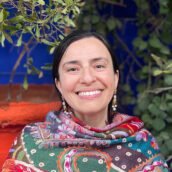
Season 04 – Episode 112: From Controlling to Cancer to Choosing Herself, with Urszula Radzińska
By The Gifts of Trauma /
Listen this episode here:
or here
Five years ago, during the COVID lockdown, Urszula received an email that informed her that she had cancer. No doctor called first to walk her through it, so she assumed it was a mistake, but her doctor’s call the next morning confirmed the diagnosis. Up until that point, Urszula had been the person who managed everything and everyone, a role she first took on as a child.
She carried that same instinct into music school, journalism, and her own business (a communications agency built entirely on her own terms where she answered to no one). It took a cancer diagnosis and one blunt sentence from a Chinese medicine practitioner, to show her what all of that managing had actually cost her.
In this conversation Urszula also shares:
- The unexpected gift buried inside a diagnosis nobody would have asked for
- Why it took her so long to understand a Chinese medicine practitioner’s assessment
- What redefining ‘being good’ actually means became the hardest part of her recovery
- What she built in Warsaw to share what she learned, and why she refuses to push it on anyone
This isn’t a conversation about cancer, it’s about a woman who spent decades making sure everyone around her was fine, and learning—the hard way—how to notice when she wasn’t fine herself. Today that same instinct to manage everything has shifted into an invitation: “Come find your body at 7am or 8pm, in Polish or English, and no one will try to convince you to stay.”
Episode transcript
00:00:01 Kevin
If you’re not a therapist or a healer, but you heard our guest describe the personal transformations they experienced during their Compassionate Inquiry journeys, and wonder, what might that be like for me? There is a program that is offered to anyone who wants to experience the power of Gabor Maté’s approach to trauma healing. I’m Kevin Young and I’ve been facilitating CI Circles since 2022. I’ve seen people transform in many ways. I’ve seen people change beliefs, relationships. I’ve seen people change how they show up in the world. I have seen people literally change how they look, in front of my very eyes. There are many, many ways that people change during Compassionate Inquiry Circles. Circles is a 10 week small group experience. Click the link in the show notes. That’ll bring you to a web page that gives you all you’ll need to figure out if this is for you.
00:01:08 Urszula
This life is not so serious really. We can have fun, we can enjoy other people, we can enjoy life. And we can, of course, be fully in our sadness. If this is sad… if something is sadness. Be really fully in our life. We have something we can just do the best we can. Use this, what we have, each of us. I was born in PUland, but somebody was born in India. In different moments we have different access to different resources to live our lives in the best way. I think that we all have a chance it’s just to really play with this reality and really enjoying this by experiencing this fully, really fully.
00:01:56 Kevin
I’m going to steal what you’ve just said because often people will say to me why do you meditate? Or why do you do this? And I think the next time I’m going to answer by saying, “So that I can be fully in my life.”
00:02:13 Rosemary
This is the Gifts of Trauma Podcast. Stories of transformation and healing through Compassionate Inquiry.
00:02:30 Kevin
Welcome to another edition of The Gifts of Trauma Podcast. My name is Kevin Young and I am here with… I’m going to give you your full name, Urszula Raginski. And from now on we’re going to call you Ula. So I’m here with Ula. I’m really excited about the conversation that we are going to have. Fascinated by your work, by what you do and I’m just nosy and curious and I’d want to hear lots more about you. So thank you for being here.
00:03:02 Urszula
Thank you so much and it’s a pleasure to be here again. I’m so excited for just for space to cover today.
00:03:09 Kevin
Good. And Ula, I am aware that we have a lot of common interests. You have done, and do, a lot of things that I’m really interested in. Loosely, I guess, loosely around the idea of healing and presence and wellness. I’d love to get into that, and how I would like to move our conversation. If it’s okay with you. I’m going to get you to introduce yourself in a little minute and tell us what you would like us to know about you. And then I kind of want to follow a trajectory of, from you being young, how that was, until today. We won’t cover everything that has happened to you from when you’ve been young until now. I get that. But we’ll touch on some of the really important things, important to you, and important for our listeners to know about you, because you do have a fascinating story. So I could read some stuff from your website and your bio and all that very formal stuff about you. I could read that, but I don’t want to. I would love it if you would introduce yourself, include whatever you believe is important, and take as much time as you want to tell us. Who is Ula Raginska?
00:04:25 Urszula
Ula Raginska. First of all, I am a woman. And. And second of all, I matter. I think this is the most important role in my life. Who am I? I’m a person who’s sharing with others the space to be with themselves. I teach meditation. I created space. Just space. My meditation space, the building. It’s meditation room. It’s rooms for the healing, individual work. I’m a creator and I just create a lot in my life. And yeah, so that’s me.
00:05:00 Kevin
Thank you. Woman, mother, creator of space. And my meditation space is in Warsaw, in Poland, right?
00:05:08 Urszula
Yes, my meditation space is in Warsaw. We operate in Warsaw, but we operate online too. It means we offer online meditation. It means we are just around the world. We have people from around the world who join in the meditation which we offer in the morning, in the evening. But basically we are in Warsaw, in Polish, but we speak English too. This is not our first language, but we speak English.
00:05:35 Kevin
My guess is you probably speak English better than me, Ula. Your English is probably better than my English. Ula, here’s a question. When I find people working in this work and like I say, we’re going to track back. I’d love to know a little bit about your history. Why do you do what you do?
00:05:50 Urszula
I think it’s this core belief in me to be a good person, I think. it was always very important for me. But what I’m doing now, it’s from the needs that I discovered in myself. Because you asked about being a child. In that moment, I just wanted to be a musician. You know, when I was there playing piano, I wanted to be a great pianist. And I’m an AD now. But after this music education, journalism, I just started communication agency. And I just dived deep in business world. But this machine, very fast, with a lot of projects was stopped by my illness. I got cancer ,and this was just like a huge hit. And then I needed to start listening to my body in a different way, listen to myself in a different way. So it was just the turning point of everything. And then this idea of sharing that I discovered is so easy, so easy. And that I didn’t know how easy it was, that something was missing. This missing point, this missing puzzle that somehow was missed during this old education. All this stuff, all this important stuff. When I discovered it is so easy, breathing, I decided, no, it needs to be available for everyone. That’s why I’m doing now what I’m doing, because I think it’s easy. It’s not just for the rich people. It’s not the luxury. We all have it, but because we are cut from the nature, most of us, we just lost this natural way to be alive. I think when we leive, we just forgot a lot.
00:07:40 Kevin
Well, you’re showing people how to be alive. Would that be a fair thing to say?
00:07:46 Urszula
Yeah, it’s my challenge too. It means I’m not the person finished. I’m not guru, I’m not just upper. I’m just on the way too. But somehow I’m discovering this and I feel that what we can do, we can really choose this freedom to be alive, not dead, before we are dead, really dead. It means we can choose aliveness in our life. So each of us, of course, on their own way. But yes, we can choose aliveness. I’m teaching being alive.
00:08:21 Kevin
Sounds wonderful. You reminded me of… Oh, I can’t remember who said it, but one of the spiritual teachers talked about, we have to die before we die to be alive. So to die out of that rat race and commercialism and busyness, to move into a place of being fully alive. I’m keen to ask you something. I had a question in mind, but you just said something, and you said to be a good person. What does that mean? What sort of person is a good person? Or what does a good person do?
00:08:50 Urszula
I think this definition changed during my life. In the beginning, when I was smaller, smaller girl. I think the good was the person who did right, who did a lot, who did the right things, who was just good girl, good girl, mean nice, no problem, good learner, fast learner, all this stuff from this perspective, to fulfill others need, it was the good in the past. Now being good means for me being good to myself, just hearing my needs, first, and respecting my needs and still learning how to talk with my body, how to be in this connection with me, serve others. So this good means for me, being good for me. And then there is possible just to be sharing with others what is possible.
00:09:47 Kevin
That’s a big change from being good is fulfilling the needs of others, to being good is looking after myself first so that I can then help and serve others.
00:09:58 Urszula
Yes, because what I define now as a good, before, I define this as a egoistic, that it’s selfish, that it was selfish. Now I describe this, that this is just I’m the first one to myself, and it not opposite to be good for others, to share with others, to help other people, but not forget about myself. Just being still connected, just like, this is for me the huge kind of mastery to be with me and be with other people in the same time, just be connected, being close and at the same time just really be with myself.
00:10:41 Kevin
I’ve been studying recently for the last couple of years with Jack Kornfield. I was teaching a little thing on compassion for self, and compassion for others. And one of the things that he talks about is, or the way that he phrases it, he says, is there compassion for this one too? As he points to himself, can I attend to myself too? Because otherwise we burn out, we get ill, and I’m sure we’re going to talk about that illness and burnout and getting to the end and thinking I can’t continue like this anymore. I’ve been trying to be a good person by fulfilling others needs and now I’m sick, now I am ill. Ula, I want to, I want to. It’s all about me with me. It’s all about me. It’s all about me with me. I would love to, I would love to discover a little bit more about you and take you right back to the start. The reason I ask this, because I’m always fascinated at how people started out in their life. How they learned to be their adaptive behaviors, their coping mechanisms, their worldview, how they were conditioned and seeing where that brought them to. And then the people I really like to speak to are the ones that have got to that place and then thought, no, I need to do something else. This is not for me. I’ve just made myself sick and ill. So bring me right back to the start. What was life like for a little Ula?
00:12:03 Urszula
I was, I am fast learner. I did a lot. I was always in two schools, just normal school and music school. And after that two subject in university. After that, few companies, so a lot of stuff. During the companies, the family, the girls, just busy person, goal oriented person. With all this thinking that I can do everything, no one can stop me. I could do whatever I dreamed. It’s just happening. The time was my friend. Other people would say this is not possible. It always was possible for me. So it was me. Everything was as I wanted. I was my boss, I was just doing whatever. I figured out that it’s good. I just followed this moment. And when I got cancer, it really stopped me because I got it in the moment that I thought that I’m living quite a sustainable life. It means I was meditating already, I was eating good. I thought that I’m leading kind of balanced life. It was so funny for me because I get this diagnosis that I had a cancer. I was doing the facilitation course for talking to your body-mind process. It’s the process that I’m leading. This kind of a little bit hypnosis. People are relaxed and there is talking between body and mind and consciousness. How we faint the body, we talk with the parts of the body, we never talk. And during this process we just finding new ways how to fulfill our needs. Because in this method is that everything happens for us. And our body is just very similar to the Compassionate Inquiry that the body just doing the tool, the behavior, the coping mechanism. We can say in the way that it was possible. But sometimes of course it doesn’t. It’s not useful anymore. And in these methods our unconscious creativity is looking for the other ideas which works for us, which could be better to fulfill our need. So I was during this process, it was quite deep and I was during this mapping myself, checking, going very deep down. And during this, I get information that I have a cancer.
00:14:33 Kevin
Tell me, Ula. So that’s a big statement, right? So I was doing that and I get it. I was doing this process. It almost sounds like a vipassana type of process where you’re communicating with your body and listening to your body. But then you said I got this message, right?
00:14:47 Urszula
Yes. To be more more specific. It was the crazy Covid time. I had a lot of changes on my skin and one of them didn’t look very different. But for somehow, I decided just to check this. Went to the doctor and they said okay, it doesn’t look okay, you just need to cut it off. So you cut it off. The small piece of the Skin and it’s going to the research. And normally you didn’t get this message through the mail. Because the skin was sent to the research to check if there is something dangerous. And normally the doctor calls you and speaking with person to person. And it was the normal day. And I get email with the message that this is the cancer, first stage and all this stuff. And I thought this is mistake. It’s not possible that I could get such message in that way. So I just totally. You know. No, I didn’t read this message. But after a few hours, next day morning the doctor called me and finally I received this message about this. What’s important that when I get information that I had a cancer, that I… that this is serious. I need to go to the oncologist. Do the staff do the more operation and all this next step. I was in the moment that I asked myself that I must need something. I was asking what am I not seeing in myself? What behavior am I doing that somehow, how I live lead me to this moment. What I need to change not to be in this again? And it was the second. my meditation part. Especially with this talking body part. So during all this process, it took me then three months during this Covid all this crazy stuff, which world wasn’t. Didn’t work in the way normal way. Especially in medical services. But I think that the turning point for me was, because I went to the Chinese doctor too. I always dream about this. I need to go to the Chinese doctor. Because always seems for me, very sophisticated. But I was too healthy. I didn’t have any reason. Finally I get cancer, I could go. And I remember it was the doctor recommended by my friend. And she looked at me, she checked my pulses and she said, “But you are totally drained.” I said, “What?” I just. I couldn’t understand what she’s talking. What does it mean? Because I didn’t feel that. In her opinion my body was very tired. I didn’t feel it. I had this energy, but I didn’t feel it in the body. And she said, “Analyzing these meridians, that this is on the meridian of gallbladder.” And it was a point of wind. And it’s probably you just need to let go. And she used just Polish words. She said, “Aou have to not think. And I said, “But the mind don’t read…” “No.” And she was just tired with this mind explanation. And she just was “Just let it go.” And I just felt in that moment I’m starting to sweating that I. I’m so stressful that something really crazy happened to Me, because I’m my only boss. I don’t have other bosses. I was only bosses in my companies. So there was no person I could say that somebody made me to do something. So when she said let go, it was very huge moment for me. It just this conversation with her and it was just the beginning for me just to seeing how different I can approach my normal life. Because in the first moment I just thought, okay, so I will do at the Excel, I will just put all the tasks what I do and I will just remanage this stuff and I will do less. It was my approach in that time that I can manage this somehow. It was like, of course I feel something, but now I have huge respect, after all this journey through this, all five years through this moment of this conversation that when somebody don’t feel, this person really doesn’t know what does it mean because this person feels what feels. And I was in that moment and I could feel what I could feel. Now when I’m just few layers unfolded later. Now I know that I can feel more. But in that moment I was just shocked and I really wanted to manage this in my way. This all, you know, body-mind journey really started in the deep dive.
00:19:43 Kevin
You said this was five years ago?
00:19:45 Urszula
Yes, in 2021.
00:19:48 Kevin
2021. And I’m getting a picture. Tell me if I’m wrong. I’m getting a picture of prior to 2020, a successful, busy, effective, efficient woman who was doing a lot herself, managing a lot. I get a picture of this hyper independent woman. And even as you described, when you got that cancer diagnosis, and you said I can do it all myself, I can manage this. Here’s another thing that I can manage because I can manage everything.
00:20:21 Urszula
Yes.
00:20:22 Kevin
Where did you learn that? Where did you learn that you had to manage everything?
00:20:26 Urszula
Of course, at home.
00:20:28 Kevin
So tell me about that.
00:20:29 Urszula
I’m the oldest child and very quickly in my child mind, I just took responsibility for my parents, my sisters. My parents were very young when they got me, and there was a lot of stress between them, a lot of just fighting. So somehow I just figured out that I will manage this.
00:20:55 Kevin
Ula, can I pause you? I would love to just know something and please only answer questions that you want to answer. So a child figures out that I need to manage my parents and my siblings. You said sisters. Did you have two sisters?
00:21:08 Urszula
Yes, two sisters.
00:21:09 Kevin
Two sisters. So the eldest girl and already this young girl is working out, I need to manage my parents and I need to manage my sisters. There’s a lot of stress between my parents. My parents are very young. I would like to get underneath. What is it that a child is feeling if they believe that they need to manage their parents. How were you feeling? Do you remember?
00:21:35 Urszula
It’s feeling of loneliness. And in this core feeling, somehow I didn’t feel safe. Yeah.
00:21:45 Kevin
How does… and I know you’ll know this from our work and I think it’s just important for our listeners and for this conversation describing ‘I did not feel safe.’ So you’re describing something that you’re not. I’m feeling not safe. So if you’re feeling not safe, safe, then what is it that you are feeling? How does not safe feel?
00:22:12 Urszula
Just be in danger. Afraid.
00:22:12 Kevin
So afraid. Okay, so thank you. Here we have a little girl who is afraid, in danger, perceives herself to be in danger. There’s a lack of safety and she has learned. I can do something about this. I can take care of all of this. Okay, and how was that? How was that to be so young and to be scared, in danger, not safe, and be trying to take care of everything?
00:22:40 Urszula
It wasn’t easy, but somehow my coping strategy, just doing a lot, doing good with success. It gave me a lot of family and social applause. It gave me a lot of appreciation. So this cost, I didn’t feel this cost as a girl. Now, when I resonating with her, when I’m compassionate with her, now I feel this heaviness and that she didn’t have anyone that could see her and that she could share, and there was no space to be weak. Yeah. To just to be needy in any way. I was only in this achieving part.
00:23:26 Kevin
And Ula, it’s really interesting of course that as you’ve said, this dynamic, this aspect of you that could take care of everything, do everything, look after my parents, look after my siblings, be successful, get good grades at school, be really smart, open my own business, go through journalism and communications companies, and then cancer diagnosis. So talk to me then, if you will, about your journey out of or away from that cancer diagnosis. Listen, and I don’t want to be disrespectful. I have never had a cancer diagnosis. So I don’t know, I don’t know what it feels like. I can imagine it could be very frightening. It could be a wake up call. There could be a lot of soul searching, a lot of fear. You have children, and again, I haven’t been there. So I’m guessing that could be a big shakeup in your life. Maybe a ‘holy shit moment’ that this is happening. So tell me then about your journey out of that and how that has led you to what you do today.
00:24:29 Urszula
In the moment of the diagnosis, I was afraid. But in that moment I wasn’t afraid of me. Because of me. I was afraid that it’s too early to die, because my girls are too small. That I should be very neat mom. So in that moment I even didn’t thought about me, at this moment it wasn’t important, me. So during this process of few months, just inquiring, just talking with the body, all this process, I stopped. I just took my me away from the business and I really put me into the spotlight. And after this few months I just thought, oh yes, so I know now I know I just should give myself what I’m giving to others. So I thought this is my holy grail. But I didn’t know that it will be just the beginning of really changes. We just thought that oh, this is just missing puzzle and that’s it. And let’s other stuff stay the same. No, it’s just changed layer by layer. It’s changed how I started to react on the reality, how I started to choose myself.
00:25:47 Kevin
What does that look like Ula? And I’m sorry for interrupting you, but I’m curious if there’s a person at home listening to this and maybe they’ve had a diagnosis over of an illness or maybe they’ve just come to a point in their life where they’re thinking I can’t do this anymore. And you said I started attending to myself. Give me an example, what does that actually look like?
00:26:07 Urszula
It’s very funny because on a business side, I was the person who was very direct. I knew what I want. But on my personal life it was different me. I thought always about others. Me, was through the eyes of other people. So it was really, really a situation when I said no in a private life. So I remember situation when on a this rational way I needed to say no. And I finally say no. But after that, when I said no, I needed to explain. So this moment. This was very rarely situation that I said no. When even I said this no. Somehow after that I thought okay, maybe there will be another scenario that could be softer. This no. I couldn’t tend this situation that my no, will make somebody in discomfort, make some unpleasant feelings. So it was very difficult for me especially on this relations just like that we can copy them from home. Just classical pleaser. So when this cancer just started to unfold, I just started to uncondition this conditioning. But I didn’t realize on how many layers, in how many situations, this choosing me appears, in how many situations? So it’s a lot. So this is this huge change. And of course one level is on our mind that we just noticing what I’m doing and what I discover. How bodywork helps us to get access to this yes for us, this is my journey, how it can help because sometimes when we are in tension, when we are 10, we really don’t have access to any thinking about other solutions. That’s okay for now. It’s now when the body is going to be more relaxed, then somehow you have bigger window.
00:28:24 Kevin
So I’m really keen to know then Ula. So here is a woman pleasing everyone, working really hard, raising her family, running her businesses, cancer diagnosis, really worried for your children. Discovering a lot about yourself, discovering where this ‘yes to myself’ was in your own body. So what happened then you decided, hey, I have discovered this thing or I understand this thing and I want to teach that to others. Tell me a little bit about that decision.
00:28:51 Urszula
Yes, I just wanted to share it more, because during this moment I created kind of meditation room in the building. I just started to do this. So I had this foundation of this. But during the illness and during this process of recovering, redefining my reality and how I perceive this reality, this idea was growing because I was looking new methods, new stuff, how I can do it. I was just finding ways to better understand me, and creating the space that people can experience this. And especially with all the respect that all of us has a totally different way. It means that for some of us it will be meaningful conversation, which will click to start the change. For other it could be massage and for other person it could be dancing. This moment, these sweet spots, can be in so many different moments that will start journey which for all of us looks in a different way. So that’s why my idea was that we need to gather this in a holistic way with all the respect of the journey of each person, that we do the best what we can do, each of us.
00:30:18 Kevin
We’re taking a brief pause to share what’s on offer in the Compassionate Inquiry community. Stay with us, we’ll be right back.
00:30:27 Rosemary
If you’ve been listening to our podcast, you may have heard guests connect their birth experiences with enduring subconscious, behavioral and emotional patterns. To help break this cycle, Compassionate Inquiry offers The Portal a 28 week trauma informed training for perinatal health professionals such as midwives, obstetricians, nurses and doulas who want to empower their patients to trust their innate ability to birth, bond with, and nurture their child. To learn more and register, just follow the link in the show notes.
00:31:04 Kevin
Thank you, Ula. So then when I read a little bit about you and in My Space you’re offering trainings within the OSHO active meditation practice. I’m reading that training for meditation instructors. You have active meditations, you have development workshops, you have individual sessions. So tell me a little bit then about what goes on, if someone, either online or in Poland, in Warsaw is listening to this and thinking, I really like what this woman’s talking about. I like how she’s describing this relationship with herself. I like the work that she’s doing. If someone is going to come into connection with you and to begin to do this work, what might they expect to find?
00:31:48 Urszula
First of all, I’m just checking what is the stage of this person, and what is the need, if I can help. So it’s just starting with the kind of introduction conversation that we are checking if I’m really the good person to help with this need, which is appears. If it is we just working through the body, through the meditation, through Compassionate Inquiry sessions to unfold what is ready to be unfold. So this depends on the person, how many times we need to meet. Sometimes for people it’s enough just to participate in active meditation. Because sometimes, in the beginning, we just need to building the trust relationship with the body. And later when the body has this availability to be relaxed, to express emotion, our body container is bigger then, in that moment it’s much easier just to work on the beliefs on what is there. Thus we are in a different stage in that moment, with me individually. So it works like this. In our space people can just join for the meditation check which is good for them especially these active meditations were so good for the people with ADHD, because normally when person with ADHD, somebody’s telling okay, let’s sit still. No, it’s not for me, it’s really situation that I want to run out. When there is first the movement, the breathing, then this stillness, there could be a pleasure. It’s really very difficult to believe that this state is available for the person who’s just running around. And of course in the meditation that we both know it’s not about the state of no mind. Of course it’s super when somebody’s achieving this. But for just normal people who day by day running on this marketplace, for most of us it’s amazing when we just starting to see the story we create in our head, and we just can learn not to be attached to them. And all these body techniques helps to get to this state, it’s much easier just to see that we are not this story, that something must be done, this person hurt me. All this story which narrow our way to see what we see.
00:34:25 Kevin
I’m really enjoying, as I listen to you, the idea of gently guiding someone back to their body. Be it through active meditation, be it through formal meditation, sitting down, the act of guiding someone back to their body. Before we start to do the work around the beliefs that we carry and the stories that we carry. It sounds like a really useful process and something that I noticed that in many of the contemplative spirituality teachings, there doesn’t seem to be an understanding that for some people it is almost impossible to be in their bodies because of trauma, because of story, because of beliefs, because of anxiety, because of ADHD. And I find more and more these days that before we can do anything, we need to be helped to come back to ourselves. And I’m curious then, for people that come to work with you, what do you see change for people?
00:35:34 Urszula
It’s a very vivid example for me when, before cancer, I was leading meditation for my employee and we just renting the room in the city and we just did dynamic meditation once a week. And one of my editor, one girl who was really shy, just the persona, just invisible person for everyone. She didn’t have any borders. She regularly joined us. And after some time, when she entered the building, I could hear how she loudly laughed. She started to take up her space, that she was just, she could be someone, she could have voice, she just. You could feel her, hear her. So it was just amazing. After that she finally she changed her job. And I was so chilling to her because it was very good move. It was like I said in the beginning, we just have more light in our life. We are not slaves of this conditioning that we need to be shy, we need to be easy. We don’t… better to not do something loud so we can change. What I was observing on her, it was amazing because I was meeting her every day. Because normally I’m not seeing such big changes in people who was joining my meditation because I’m not observing them in their daily lives. I can observe how they meditate, I can observe their access to the be present during the meditation, what I can see, but how it changed in their lives not so often. But with her it was just amazing that she just really redefined her expressivity, how she was in the world. So it was really amazing just to see how it changed her.
00:37:27 Kevin
And I love Ula, when you’re describing that what I really like is I think around meditation, there could be some myths or untruths. And I think sometimes people think, if you’re going to meditate, you’re going to become a yogi, you’re going to end up in a cave in the Himalayas, or an aesthetic, or roaming around India in your bare feet for 40 years. And what I’m hearing from you and what I’m hearing about the space that you’ve created, my meditation space, it’s not a one size fits all factory line. And you’re going to come in all messed up and you’re going to come out looking exactly like everybody else. That comes out. As you’ve described that employee. I could see how excited you were that she landed in her body and she was laughing more. And then the final thing, she changed her job. So for that person, success, and I’m doing that in air quotes. A successful process for her was to just realize who she was, not who you wanted her to be or who Osho or the Buddha or God or anybody else wanted her to be, how she wanted to be. And I really love that. And I think there’s a myth that people think, I don’t want to become a yogi. I don’t want to become silent in my life. I don’t want to be distant from everything. And you’ve just described a story of exactly the opposite of that. A woman landing fully in her life and taking ownership of her life. That’s a really beautiful story.
00:38:53 Urszula
Yeah. I think it’s really about experiencing this life is not so serious, really. We can have fun, we can enjoy other people, we can enjoy life. And we can of course, be fully in our sadness, if this is something, is sadness. But be really fully in our life. I like looking on our life kind of, game metaphor. We have something we can just do the best what we can use this, what we have, each of us. I was born in Poland, but somebody was born in India. In different moments, we are a human. You have different access to different resources just to live our lives in the best way. I think that we all have a chance just to really play with this reality and really enjoying this by experiencing this fully. Really fully.
00:39:45 Kevin
Sorry for interrupting you, Ula. I’m just thinking I’m going to steal what you’ve just said because often people will say to me, why do you meditate? Or why do you do this? And I think the next time I’m going to answer by saying, so that I can be fully in my life.
00:39:59 Urszula
Yeah, Yeah, I would like that me, would be fully alive, before I will be dead, before I will be take off from this game and I will finish this. But this is my wish for everybody, that we could really fully be alive.
00:40:15 Kevin
I’m laughing at myself, Ula, because if I don’t get a mention of John O’Donoghue in each podcast, then I’m sad. And you’re just reminding me of a little story John O’Donoghue talks about. If we deaden the depths of ourselves, then we cannot be in communion with life. And I hear you say to be fully alive. And of course to be fully alive is to grieve fully, to love fully, to honour our anger and our boundaries, to do what we enjoy, to have the full experience of being human. All of it, all of it. To offer that to people, Ula, as I’m going to use the word prize, the result or the symptom of coming and working with you, and having a meditative practice and understanding themselves, for that to be the prize for someone so that they may live fully in their own lives. That’s a really worthwhile prize, right?
00:41:14 Urszula
Yes. But they need to be inside the decision, that I decide. I want this. Because very often we really choose what we know and because my mom always did in this way, because it should be in this way. We just going in this, in the steps that we think that they should be. And for some people, it’s okay. I think that not everybody needs to do the changes in their life. But if somebody feels that wants to change something, wants to start their way, to see their conditioning, their coping mechanism, that they could just light up and just see, okay, maybe it was useful, but maybe now I don’t need it 100%. I can use it from time to time, but I have access to something more. You have a choice. So it’s like this vitality for me, it’s just gaining freedom. This is about this, that we are free. We can really choose if you want to go and do, as a society required from us, that’s amazing. Just do it consciously. If you want to live in a forest, do it. We can choose, if we do this from this space of consciousness, but I think that intention should be that it’s not… I remember myself from the time that I was discovering these methods, these moments of blissfulness. I want to share with everybody. It was so great. I’m the person I wanted to share just to convince them that you need to try this. And now I’m not doing this, not anymore. It means I’m respecting… I’m sharing that it was amazing for me, but I’m not pushing them. You need to try this because without this, your life is not… You need to try. No, I’m not doing this anymore because I know that this is their way. If somehow they seeing me, will think, oh, maybe I will try what this girl is doing, so that’s okay. But I’m not pushy in this, because I know that each of us is bounding in front of each of our ways. It’s really, I think all of us, each of us is doing so much work. And when it will be the moment, I will share with pleasure what I know and how it works. But no pushing. No.
00:43:44 Kevin
You’re making me think, I might send it to you. There’s a little interview with Adishante on YouTube. And I was smiling when you talked about, you know, I need to share this with everyone. Everyone needs to know this. And I too, can remember that in myself, you know, six or seven years ago. And Adeshanti, he was actually listing that as part of the process on this path. He says most of us will go through that. Most of us will come to a point where we think, shit, I need to do something. I need to change something. And then we find a spiritual or a meditative or a mindful practice, and we just want to tell everyone. I need to tell everyone. And then he says, after a few months of that, we have another realization of, maybe not everyone wants to hear this just yet. Maybe I should just go a little bit easier with people. And he talks about… what he said was that he will not mention to anyone. But if someone asks him, the first time they ask, he’ll say, yeah, yeah, sure, sure, yeah, I’ll recommend some books. And then he’ll wait for them to ask a second time and he’ll say, yeah, sure, sure, yeah, I’ll get some. I’ll get some books to you. I’ll send you some things. And it’s only when they ask the third time that he’ll say, okay, let’s talk about this. You’re really into it. So he’s really wanting the person to want it for themselves rather than for him to push this change onto someone. And I liked you before this conversation, Ula, and I’d like you even more after hearing you share that, because I think it’s a really important thing to have that integrity and peace within ourselves, that we’re not forcing things on people. I think it’s really special. So I’m conscious of our time. I have one or two more questions for you, if that’s okay.
00:45:31 Urszula
Yes.
00:45:31 Kevin
One thing I’d love to ask you. If people want to touch base with My Meditation Space in Warsaw, have you anything coming up that might interest them or anything going on? What might you like them to know about the near future?
00:45:44 Urszula
I think it’s these daily meditations online. This is super interesting. Of course, if somebody is in European time, we are in Warsaw, so we just operate in this time zone. So it’s on 7am morning meditation and 8pm evening meditation. All our instructors speak English, so there’s no problem with meditation in both languages, Polish and English. So I think this is really amazing opportunity just to start the day with other people with this active meditation, just to try it and deal with this. I think this is really available for our audience which can listen. Listen to us. Another stuff for the people from Warsaw, just you can come and for our events inside, for our workshops, for our trainings, you can become a facilitator for the active meditation and come for the training with me. And of course, you can come to our center and connect with other therapists. There is a lot of therapists from different area, from the whole body, mind. And I’m sharing a podcast in Polish, Polish name Obetna, but in English, presence. So I’m sharing my challenges about presence, because presence is my life topic, my challenge, and my sharing is a presence. Yeah. So it’s the best way to connect through My Meditation Space.
00:47:09 Kevin
Thank you. And we’ll have stuff about that in the show notes so that people can look down and connect with her. And then a question, if I may, that I like to ask all of the people that I talk to. And some people answer this question very seriously. Some people answer it very playfully. There’s no pressure here. Not a competition. So if I was to ask you, Ula, if you had the ear of humanity, what would you whisper into the ear of humanity?
00:47:42 Urszula
Remember that life can be joyful.
00:47:44 Kevin
Remember that life can be joyful.
00:47:46 Urszula
Or even remember that, life is joyful.
00:47:50 Kevin
I like that answer. I might also steal that one from you. So I’ve got. Why do you meditate? So that I can be fully in my own life. Yeah. Fully alive. And someone might ask me, why do I meditate? Or for a little piece of advice or help. And I will say, remember that life is joyful.
00:48:11 Urszula
Yeah.
00:48:12 Kevin
So thank you for those. Ula.
00:48:13 Urszula
Thank you so much.
00:48:15 Kevin
Ula. We have come to the end of our time. I just want to say my time has went very quickly. Chatting to you it has whipped past. I want to thank you and I want to wish you well with your health, with your family, and with my meditation space in Warsaw. I really get a sense of of the truth of you in that your altruism and your desire to help people comes from a desire to help people. There seems to be a real authenticity about that and I really like that. I really like that when people who teach this stuff are honest and genuine and open and vulnerable and real. And I really get a sense of the realness of you. So thank you for that and thank you for being here with us on the Gifts of Trauma podcast and I really look forward to seeing you soon.
00:49:08 Urszula
Thank you so much and it was great pleasure just to spend this time with you and talk. Thank you so much.
00:49:15 Kevin
Thank you, Ula. Please take care.
00:49:27 Rosemary
The Gifts of Trauma is a weekly podcast that features personal stories of trauma healing, transformation and the gifts revealed on the path to authenticity.
Listen on Apple, Spotify, all podcast platforms. Rate, review and share it with your clients, colleagues and family. Subscribe and you won’t miss an episode.
Please note this podcast is for informational purposes only. It is not a substitute for personal therapy or a DIY formula for self therapy.


Resources
Websites:
Related Links:
Social Media:
- Instagram: urszula.radzinska
- Facebook: urszula.radzinska
- LinkedIn: linkedin.com/in/urszularadzinska
- YouTube: urszula.radzinska
- Spotify: @urszula.radzinska