
Content note: This article contains references to homicide, graphic fire-scene imagery, aggression toward a child, and suicide.
A retired firefighter and the founder of Fire to Light, an organization dedicated to advancing preventative Mental Fitness training inside the fire service, Brandon drew on his own lived experience and independent global research to develop the Fire to Light Mental Fitness Training System. This practical, operationalized approach delivers Mental Fitness training the same way fire departments train every other critical skill.
In this excerpt, a devastating call becomes a turning point, and a father learns the hardest fires are the ones that stay with you, the ones you carry home. Hear the full conversation on The Gifts of Trauma Podcast.
Matt277
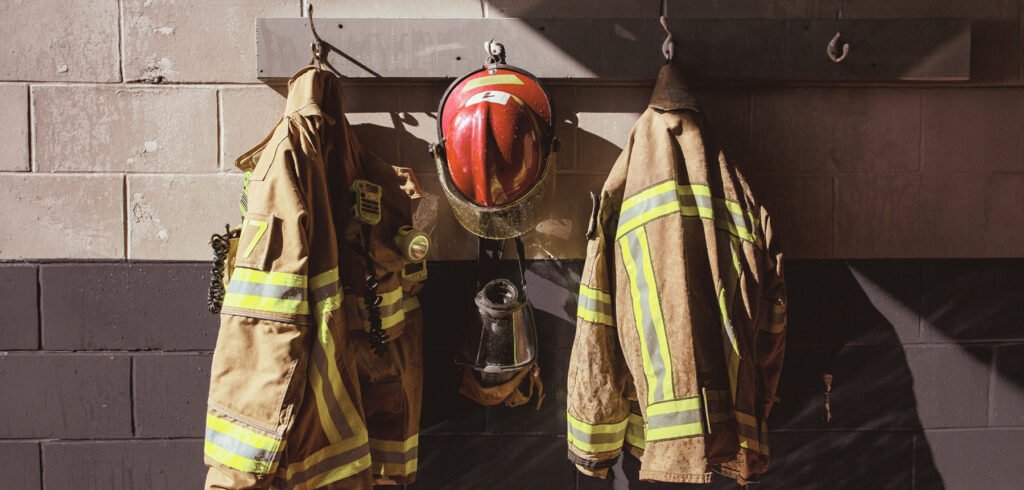
BRANDON: As much as I’m going to step on a rusty nail inside a fire or get burnt, so I wear my bunker gear. What about the psychological safety piece of it?
Firefighters train daily on every tool they use and for every physical risk they may encounter. Brandon Evans, a retired Canadian firefighter and founder of Fire to Light, spent over 15 years in the fire service before he understood, from the inside, how little of that same discipline is applied to mental health.
BRANDON: My best friend as a kid had a dad who was a firefighter. I met my wife in high school; her father was also a firefighter. Those were two adults in my life who never spoke negatively about their job. As a kid, I always loved working with my hands. We call it a calling, right? I didn’t just think, “Ah, maybe I’ll be a firefighter.” I wanted to be a fire guy. That’s what I wanted to do.
It’s an incredible career, and it’s heavy. The death of a child, a spouse… I’ve been there, I’ve seen all that stuff. You become a part of those experiences. It’s this beautiful expression of life. It’s heaven and hell all in the same place.
In December 2020, we responded to a house fire. It was a homicide. As the third truck on the scene, we did a 360-degree assessment of the house, and then we got called to help the interior crew, who were in the process of removing a body from the house. One of my crew members and I got in there and helped them, hands-on, pull the body out and bring it outside onto the driveway. I remember being frozen, staring at this body. It looked like a… it looked like a turkey, is what it looked like. It didn’t look like a human. We had to move it over a little bit to try and keep it out of people’s view.
When I came home from that scene, that was the first time… You get these eerie butterfly feelings in your stomach. That one just wouldn’t leave. I came home and I lost it on one of my kids. I ended up pushing him to the ground. He was four years old. My wife yelled at me. “What the hell are you doing? You need to get help.” She was right. I just completely broke down.
The next day, I called a therapist and booked a breathwork session with someone I knew. I’d rather pull 100 bodies out than push my kid to the ground again.
When I dived into this breathwork session right after this homicide event, I had this incredible, super vivid imagery of the homicide fire scene, of all that fire shooting out into the sky, with this beautiful sunset behind it. When we were doing our 360-degree assessment of the structure, I had seen a pumpkin decaying in the backyard. Even though the person who put it there was involved in this horrific event, they still had enough love to nurture the earth, to put their pumpkin from Halloween in their garden so it could decay and feed their fruits and vegetables. It was in my memory, this scene where I saw both of our souls colliding and embracing above the house on fire. I realized then that I’d been focusing on the wrong things.
Every single day we’re training on some kind of operational necessity. We train in everything in firefighting, how often we hit fire hydrants, train with ladders, pull hoses off the truck… So why are we treating mental health differently? That should fall under safety, right?
I did an international research study on the current state of mental health in fire services, interviewing over 100 chiefs and leaders from five different continents, representing 1.3 million firefighters. We wanted to gather as much information as we could on who’s doing what in the fire service in terms of mental health. Over 86% of these organizations only offer mental health training once or twice in a firefighter’s entire career.
Over 77% of all the fire chiefs Brandon spoke with personally knew somebody who had died by suicide. Firefighters go to too many funerals. Why isn’t more being done for the lifesavers?
BRANDON: It became clear that we are in the awareness phase of mental health. So how do we get into the operational phase? How do we operationalize mental fitness? How do we create drills that are designed to happen in the fire station, around the kitchen table, with the entire crew, in five minutes or less? We’re not trying to be therapists, but to say, here are some simple tools we can start to learn.
I learned about the power of storytelling around the kitchen table from my father-in-law, a fire chief who is very open and who always wears his heart on his sleeve. He says, “If we’re not telling our story, then who aren’t we helping?”
In a way, it’s selfish. Storytelling helps me move through the things I need to move through. I can’t tell you the number of one-on-one conversations that I’ve had within my crew at the fire hall, because it opens doors for other people. It allows them to take a different look at themselves.
When I was sharing that story in the fire hall, how I had seen myself embracing this dead victim above this fire in the house, I remember looking around the room. Everyone was paying attention. Some of the guys were in the conversation. Some of them were like, what the hell is Evans talking about? I became really fascinated by the fact that everyone was paying attention to that story. And the more open I was, the more people would come and talk to me. It’s that permission piece… Oh, someone else is doing it.
Our actions speak really loudly. Leading by example is one of the most powerful things any leader can do. We’ve said a lot in this space. Start taking action. That’s it.
The Gifts of Trauma is a weekly podcast that features personal stories of trauma, transformation, healing, and the gifts revealed on the path to authenticity. Listen to the full conversation, and if it resonates, please subscribe, rate, review, and share.
Editor’s Note: This post comprises edited excerpts from The Gifts of Trauma podcast transcript. Selected passages have been carefully woven together to create a cohesive narrative that speaks in the guest’s voice and faithfully represents his perspective. – Rosemary Davies-Janes